Whatever you require to find out about radon
Where is Radon most commonly found?
There's no single method that fits all radon removal system needs. Common techniques include: Sub-slab depressurization, where suction pipes are inserted through the floor or concrete slab into the concrete slab below the home. A radon vent fan then draws out the radon gas and releases it into the air outside.
While the wellness danger from radon exposure listed below the Canadian guideline is tiny there is no level that is threat complimentary. It is the choice of each house owner to decide what degree of radon direct exposure they are willing to approve. The chart listed below contrasts therisk of passing away of radon-induced lung cancer cells to other better recognized dangers such as automobile crashes, carbon monoxide gas and also home fires. The risk of lung cancer cells from radon gas direct exposure is avoidable but considerable. The only method to recognize your radon level is to check as well as if high levels are located do something about it to minimize.
Radon-induced cancers are triggered by moderate as well as low degrees of radon as in the home setting. Hundreds of hundreds of US residents receive as much radiation as did people living near the Chernobyl plant at the time of the nuclear accident in 1986. Smoking has a collaborating effect, boosting the radon-related threat of lung cancer cells by a factor of 10.
A lot of these solutions for radon reduction call for maintenance, and it is important to consistently change any kind of followers or filters as required to proceed correct performance. Because research study, a considerable outcome (95% CI) was gotten for the Bq/m3 category.
What kind of cancer is caused by radon?
Radon decays quickly, giving off tiny radioactive particles. When inhaled, these radioactive particles can damage the cells that line the lung. Long-term exposure to radon can lead to lung cancer, the only cancer proven to be associated with inhaling radon.
UKradon
However, some US states, such as Maine where radon levels are more than the nationwide standard, recommend all well water needs to be evaluated for radon. The US federal government has not establish an activity degree for radon in water. Yet outside air is open follow this link as well as vast, so radon degrees stay reasonably low.
The U.S. Epa (EPA) has determined radon as the 2nd leading cause of lung cancer cells in the USA. Lots of homes contain radon focus that are high sufficient to offer their occupants life time direct exposures that can increase their threat of creating lung cancer.
Why is radon bad for you?
Radon produces a radioactive dust in the air we breathe. The dust is trapped in our airways and emits radiation that damages the inside of our lungs. This damage, like the damage caused by smoking, increases our risk of lung cancer.
How long does radon stay in the air?
It can be found in all 50 states. Once produced, radon moves through the ground to the air above. Some remains below the surface and dissolves in water that collects and flows under the ground's surface. Radon has a half-life of about four days - half of a given quantity of it breaks down every four days.
How long do you have to be exposed to radon before it becomes a problem?
Radon is a radioactive gas and exposure to it causes 21,000 lung cancer deaths per year—only smoking causes more. Because you can't see, smell or taste radon, it's important to periodically test the air in your home. Believing you live in a region not affected by radon is just one of the myths about this deadly gas.
Where is radon found in the home?
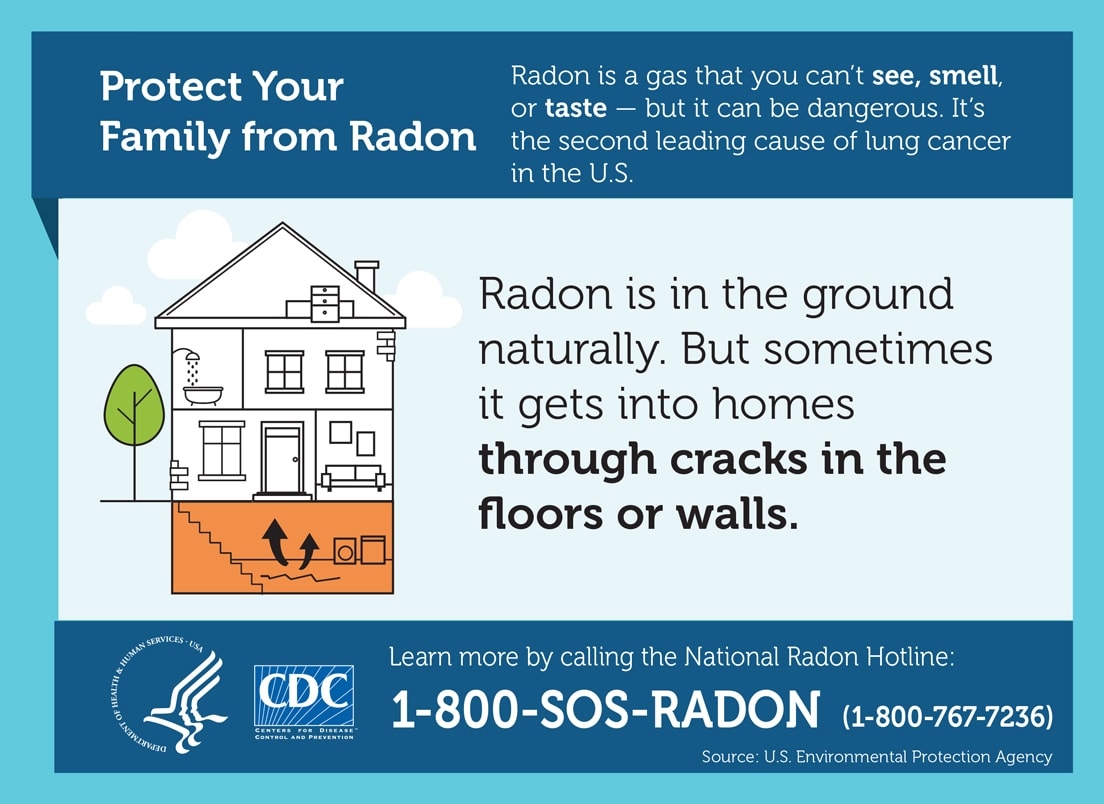
Radon is a radioactive gas that has been found in homes all over the United States. It comes from the natural breakdown of uranium in soil, rock, and water and gets into the air you breathe. Radon https://lorenzovezq095.shutterfly.com/95 typically moves up through the ground to the air above and into your home through cracks and other holes in the foundation.
- The Canadian standard for radon in indoor air for dwellings is 200 Becquerels per cubic metre (200 Bq/m3).
- Throughout the years, information that tracks radon degrees suggests that a huge portion of Pennsylvania homes have a significant radon problem.
- Radon gas threatens, and if the issue goes neglected, the radon concentration remains to increase inside your residence.
- Due to the fact that of their closeness to the area, New Jacket houses and also Delaware houses are considered at threat as well.
- Radon gas enters your home or other residential or commercial property from the outdoors, as well as with time, gradually accumulates to harmful levels that can result in a raised danger of lung cancer cells or respiratory problems.

What is radon in the home?
Radon is a radioactive gas that has been found in homes all over the United States. It comes from the natural breakdown of uranium in soil, rock, and water and gets into the air you breathe. Radon typically moves up through the ground to the air above and into your home through cracks and other holes in the foundation.
What causes radon?
Being exposed to radon for a long period of time can lead to lung cancer. Radon gas in the air breaks down into tiny radioactive elements (radon progeny) that can lodge in the lining of the lungs, where they can give off radiation. This radiation can damage lung cells and eventually lead to lung cancer.
Is it hard to sell a house with radon?
Fortunately, it's not hard to sell a house with radon, provided that you alert potential buyers and mitigate the problem, say Brian Thomas, a top real estate agent in the Denver, Colorado area, with 16 years of experience. “For as much fear and uncertainty as radon causes, there's an easy fix.”
How do I make my house safe from radon?
Install a layer of gas-permeable aggregate, such as four inches of gravel, beneath the slab or flooring system of your home if you don't have a crawlspace. Cover this layer or your crawlspace floor with plastic sheeting to stop radon gas from moving past that level and into your home.
How effective is radon remediation?
The Surgeon General and the EPA recommend testing for radon and reducing radon in homes that have high levels. Fix your home if your radon level is confirmed to be 4 picocuries per liter (pCi/L) or higher. Radon reduction systems work. Some radon reduction systems can reduce radon levels in your home by up to 99%.
How often should you test for radon?
Living pattern changes Whenever there is a change in your home, you should perform local radon testing. It's also recommended that you test your home for radon at least twice a year too. If your tests come back unusually high, then you should order one or two more tests so that you can compare the results.
Would you buy a house with radon?
Radon is a naturally occurring radioactive gas which may be found in indoor environments such as homes, schools, and workplaces. Radon is the most important cause of lung cancer after smoking.
How do you eliminate radon?
If a person has been exposed to radon, 75 percent of the radon progeny in lungs will become "harmless" lead particles after 44 years. When an alpha particle damages a cell to make it cancerous, the onset of lung cancer takes a minimum of 5 years but most often 15 to 25 years, and even longer.
Does home insurance cover radon mitigation?
homeowners insurance and radon remediation While home insurance is designed to financially protect you from sudden and unexpected perils such as fire or theft, it typically won't cover things that can be considered related to home maintenance like radon testing and mitigation.
How many people die each year from radon?
Radon is responsible for about 21,000 lung cancer deaths every year. About 2,900 of these deaths occur among View website people who have never smoked.
Is radon something to worry about?
The average home has about 1.3 pCi/L of radon. Such levels aren't enough to worry about, but under the right conditions, they could make you sick. According to the EPA, a nonsmoker who was exposed to average levels of radon for a lifetime would have a 1 in 500 risk of developing lung cancer.
Is radon heavier than air?
Radon gas is approximately 7.5 times heavier than air. It is however a noble gas with no chemical affinity but is easily influenced by air movements and pressure. In a house with forced air heating and cooling, radon gas can easily be distributed throughout the entire dwelling.
Does Radon make you tired?
The more uranium there is, the more radon there is. That makes radon the second leading cause of lung cancer after smoking. But even minor symptoms like headaches, feeling unusually tired, itching or burning eyes, irritated skin, nasal congestion, a dry throat or nausea could be due to your home's indoor air quality.