Wellness News.
What are the signs of radon poisoning?
There are no safe radon levels. Any exposure to the gas, no matter how small, can cause damage to the DNA in your lung, the lower the levels found in your home, the lower the risk you have of developing lung cancer.
Pennsylvania has one of the most significant radon troubles in the United States. About 40 percent of Pennsylvania residences have radon levels above Environmental Protection Agency's activity standard of 4 picocuries per litre. The rocks and soil beneath our residences consist of traces of uranium. When radon gas decays, it gives off contaminated radiation in the form of an alpha fragment.
You can contact your state radon board for a list of specialists or locate one by yourself. Locate a service provider that has been certified or licensed by either the National Radon Security Board or the National Environmental Wellness Organization if possible. Preferably, you need to prevent disputes of passion by working with various service providers for evaluating your radon levels and fixing the trouble.
Residential radon degrees can be measured in a cost-effective and straightforward way. It is more suitable to approximate the yearly mean focus of radon in interior air by dimensions for at the very least 3 months since of these changes. Nevertheless, dimensions need to be based on national protocols to guarantee consistency as well as integrity for decision-making. An increased price of lung cancer was initially seen in uranium miners subjected to high concentrations of radon. The lower the radon concentration in a home, the lower the threat of lung cancer as there is no recognized threshold listed below which radon exposure carries no danger.
How bad is a radon level of 8?
The EPA strongly recommends radon mitigation if your radon levels are above 4 pCi/L. While radon levels below 4 still pose a health risk. They recommend you consider mitigation if your radon levels are between 2 and 4 pCi/L. They are quick to point out that there is no known safe level of radon.
As a result of radon's gaseous state the gas mainly gets in the body through inhalation. The radon gas can be straight breathed in therefore can the "radon little girl" components radon generates. The strong aspects frequently bind themselves to dirt particles airborne enabling breathing of these components to occur.
Does Radon make you tired?
The more uranium there is, the more radon there is. That makes radon the second leading cause of lung cancer after smoking. But even minor symptoms like headaches, feeling unusually tired, itching or burning eyes, irritated skin, nasal congestion, a dry throat or nausea could be due to your home's indoor air quality.
Radon, Smoking Cigarettes, and also Lung Cancer: The Need to Redouble Radon Control Plan
Why is radon bad for you?
Radon produces a radioactive dust in the air we breathe. The dust is trapped in our airways and emits radiation that damages the inside of our lungs. This damage, like the damage caused by smoking, increases our risk of lung cancer.
Brandon Maros-Moran won 1st location, Youngeun Eunice Choi won second place, and Anya Norwood won 3rd area. All three are pupils of Mrs. Jessica Gregorski's science class at Dingman-Delaware Valley Intermediate School in Dingmans Ferryboat, Pennsylvania. The victors received Amazon present cards, and also the posters will certainly be featured throughout the year in educational outreach. DEP submitted Pennsylvania's first-place poster to the Seminar of Radiation Control Program Supervisors 2020 National Radon Poster Competition, and a nationwide victor will be introduced in January of 2020. DEP encourages instructors as well as their trainees to participate in following year's Pennsylvania Radon Poster Competition.
How much does radon cost per gram?
Radon is available at a cost of about $4/mCi.
Nonetheless, in persistent exposures or bigger amounts, radon can damage the cells of the lining of the lungs, enhancing a person's opportunity of establishing lung cancer cells. Taking a breath radon with time boosts your danger of lung cancer cells.
Who pays for radon mitigation buyer or seller?
There's no single method that fits all radon removal system needs. Common techniques include: Sub-slab depressurization, where suction pipes are inserted through the floor or concrete slab into the concrete slab below the home. A radon vent fan then draws out the radon gas and releases it into the air outside.
If the radon degree in your home is over 4 picocuries per liter of air (pCi/L, a measure of radiation), you ought to do something about it. Consider having the level minimized if the degrees are in between 2 and 4 pCi/L. Levels below 2 pCi/L do not need any type of activity due to the fact that it's tough to decrease radon degrees to lower than 2 pCi/L.
What do you do if your house has radon?
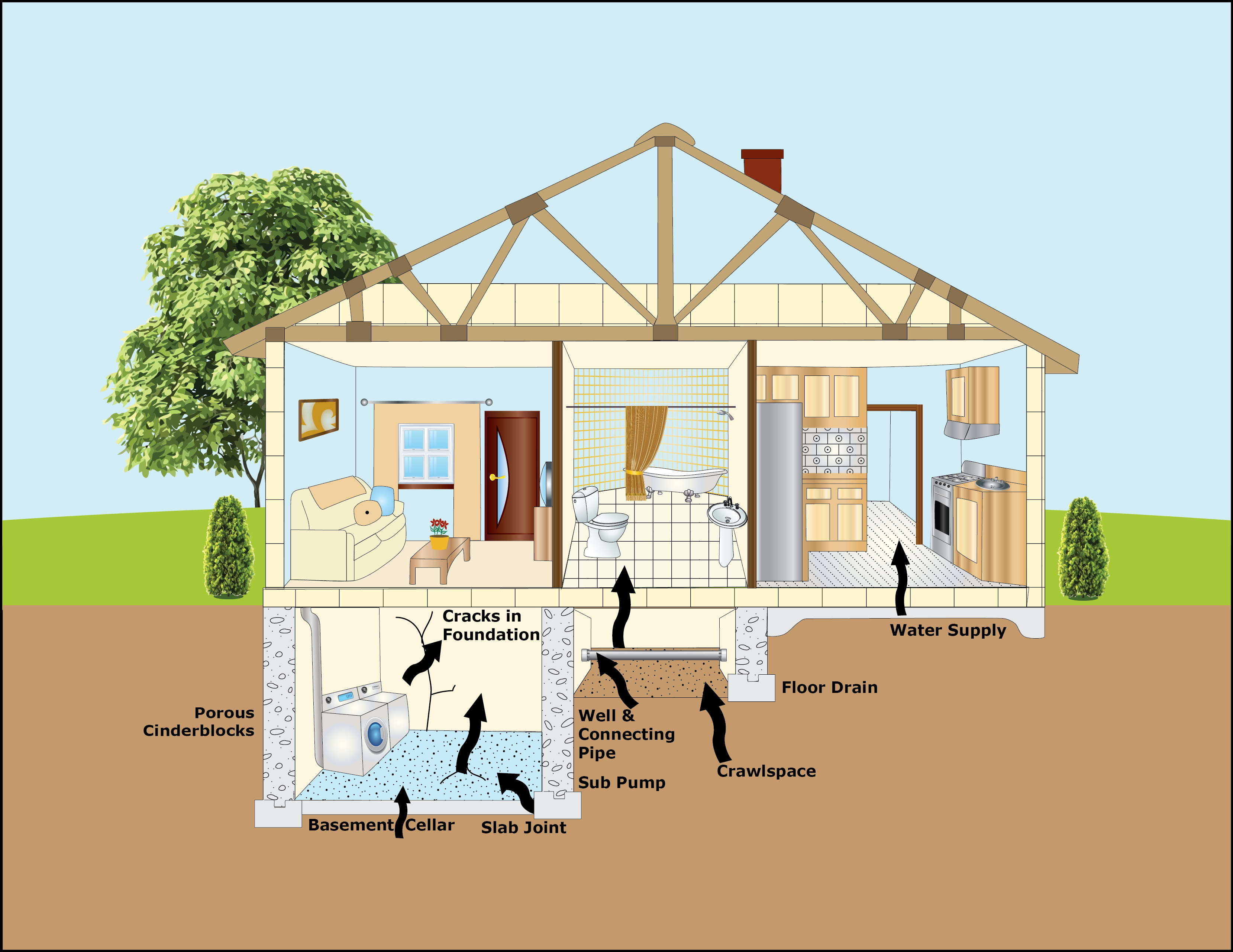
Radon can seep into any home that is in contact with the ground. It is undetectable unless you perform a radon test. It is the second leading cause of lung cancer and according to the EPA and CDC, it kills more than 20,000 annually. It is not something you want in the home you are buying.
Nevertheless, it's necessary to inform on your own and invest in radon screening to ensure you are not unconsciously boosting your threat of lung cancer cells. If you radon gas detector have a radon degree of 4 pCi/L or even more, the United States Environmental Protection Agency (EPA) currently advises that you take steps to minimize your residence. The World Wellness Organization advises mitigation at 2 pCi/L or even more. Most importantly, radon degrees change with time and also levels go up and down.
While lots of more recent houses are developed with radon-resistant functions or passive radon systems, these are not constantly sufficient to completely reduce radon degrees in your house. According to the EPA, the maximum "acceptable" level of radon is 4.0 pCi/L, but also that degree is not "safe", per se. The EPA strongly suggests you consider radon mitigation between levels 2.0 and also 4.0.
- This was large rubbish, since the pressure differential between inside as well as outside ways that the indoor constantly will have a higher degree.
- If you have questions concerning radon in your residence, you can get aid from the EPA by calling RADON ().
- As a matter of fact, research study reveals that cigarette smokers are practically 7 times more probable to establish lung cancer cells than nonsmokers when revealed to the very same quantity of radon.
- Radon doesn't relax in trying to enter into your house, so the follower continues to run as it creates airflow to keep pushing radon away from the house via the reduction system.
- However, these are normally not major factors to the radon degrees in a house.
Neither EPA neither OHA has certain assistance on radon for these populaces. Breathing radon does not create any temporary human radon mitigation health signs and symptoms such as shortness of breath, coughing, headaches or high temperature. Children (who have greater respiration rates than adults) have actually been reported to have better risk than grownups for sure sorts of cancer cells from radiation. According to EPA, how promptly to minimize relies on the seriousness of the circumstance as dictated by the radon degree discovered.
Is a radon level of 2 radon tester safe?
Radon levels are measured in picocuries per liter, or pCi/L. Levels of 4 pCi/L or higher are considered hazardous. Radon levels less than 4 pCi/L still pose a risk and in many cases can be reduced, although it is difficult to reduce levels below 2 pCi/L. Once installed, a follow-up radon test is done.
How much does it cost to run a radon fan?
Known risk factors for lung cancer include: Risk by age: About two out of three lung cancers are diagnosed in people over age 65, and most people are older than 45. The average age at diagnosis is 71. Family history: Genetics may predispose certain people to lung cancer.
How common is radon in a home?
It's common: About 1 in every 15 homes has what's considered an elevated radon level. The gas is odorless and invisible, says the EPA, and it causes no immediate symptoms, so the only way to know if your home is affected is by testing your individual residence.
How often should you test for radon?
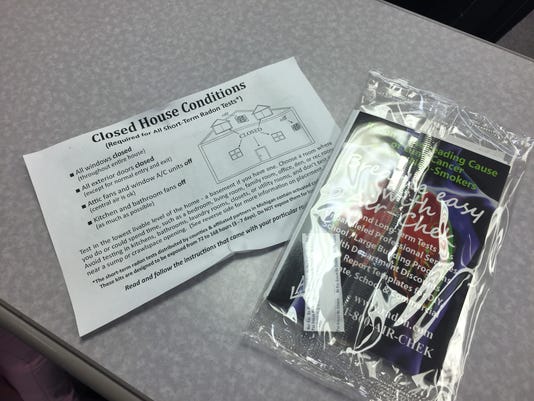
Living pattern changes Whenever there is a change in your home, you should perform local radon testing. It's also recommended that you test your home for radon at least twice a year too. If your tests come back unusually high, then you should order one or two more tests so that you can compare the results.
Is a radon level of 3 safe?
No, not at all. But a claim that a company can completely eliminate radon from your home should be very closely scrutinized. By definition, Radon Mitigation is any process used to reduce radon gas concentrations in the breathing zones of occupied buildings.
How do I know if my house has radon?
In fact, you're probably breathing it in every day, even if it's at a low level. However, you can't tell if you're breathing it in at a high level. The danger in radon exposure is that you can't see it, taste it, or smell it. And you won't have any symptoms to alert you.
Can you smell radon?
The “safe” level of radon exposure is no radon at all. The EPA's recommended level for radon mitigation is 4.0 pCi/L or above. It's estimated that 1 in 15 American homes have an elevated level of radon gas.
Is radon heavier than air?
Radon gas is approximately 7.5 times heavier than air. It is however a noble gas with no chemical affinity but is easily influenced by air movements and pressure. In a house with forced air heating and cooling, radon gas can easily be distributed throughout the entire dwelling.
How do you eliminate radon?
If a person has been exposed to radon, 75 percent of the radon progeny in lungs will become "harmless" lead particles after 44 years. When an alpha particle damages a cell to make it cancerous, the onset of lung cancer takes a minimum of 5 years but most often 15 to 25 years, and even longer.
Where is Radon most commonly found?
There's no single method that fits all radon removal system needs. Common techniques include: Sub-slab depressurization, where suction pipes are inserted through the floor or concrete slab into the concrete slab below the home. A radon vent fan then draws out the radon gas and releases it into the air outside.
How effective is radon remediation?
The Surgeon General and the EPA recommend testing for radon and reducing radon in homes that have high levels. Fix your home if your radon level is confirmed to be 4 picocuries per liter (pCi/L) or higher. Radon reduction systems work. Some radon reduction systems can reduce radon levels in your home by up to 99%.
Is a radon level of 5 bad?
Safe radon levels. The best radon level measurement would be zero. The average global outdoor radon level varies between 5-15 Bq/m3, equal to 0.135-0.405 pCi/L. For every 99.9 Bq/m3, or every 2.7 pCI/L increase in long term radon exposure, lung cancer risk rises 16 percent.
What causes radon?
Being exposed to radon for a long period of time can lead to lung cancer. Radon gas in the air breaks down into tiny radioactive elements (radon progeny) that can lodge in the lining of the lungs, where they can give off radiation. This radiation can damage lung cells and eventually lead to lung cancer.
What is involved in radon mitigation?
Mitigation of radon in the air is accomplished through ventilation, either collected below a concrete floor slab or a membrane on the ground, or by increasing the air changes per hour in the building. Treatment systems using aeration or activated charcoal are available to remove radon from domestic water supplies.
How do you get rid of radon gas in a basement?
The radon fans are guaranteed by manufacturers for 3 – 5 years. Their replacement cost, including installation, is usually $300 to $600. Homeowners are aware that the fan must run continuously 24/7, year after year. The typical estimate of the electricity cost is $150 per year.
Do all homes have some level of radon?
The EPA estimates the lifetime risk of radon-induced lung cancer for never-smokers at 7 per 1,000 people, compared with 62 per 1,000 for smokers exposed to a level of 4 pCi/L. Your risk goes up with your exposure to radon and cigarette smoke over time.